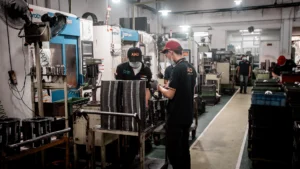

While both fabrication and machining are essential to manufacturing, they serve different roles and require different techniques, tools, and skill sets. Knowing when and how to use each can dramatically impact the quality and cost-effectiveness of a project.
What is Fabrication?
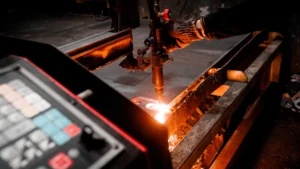
Fabrication involves assembling components from raw materials, typically using methods such as:
- Cutting (plasma, laser, waterjet)
- Bending (press brakes)
- Welding (MIG, TIG, spot) It’s commonly used to create larger structures such as frames, housings, and enclosures.
What is Machining?
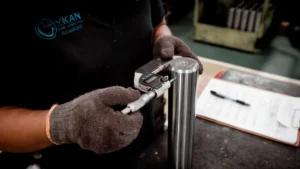
Machining is the process of removing material from a workpiece to create precise dimensions and finishes. This is done using:
- Lathes
- Milling Machines
- Drills
- CNC Machines Machining is ideal for creating complex, tight-tolerance components like engine parts, molds, and precision housings.
Key Differences
- Precision: Machining offers higher dimensional accuracy.
- Application: Fabrication is ideal for structures; machining is best for parts with tight tolerances.
- Material Removal: Machining is subtractive; fabrication is typically additive or transformative.
When to use Each
Choose fabrication for high-strength assemblies and structural frames. Opt for machining when you need precision components that require fine detail and exact measurements.
Conclusion
Fabrication and machining are complementary—not competitive. Understanding their strengths helps manufacturers choose the most efficient, cost-effective path for their projects.